- The Autism Voyage®
- Posts
- What's Your Definition of Comfortable?
What's Your Definition of Comfortable?
You've already made the uncomfortable comfortable.

Michael Pereira
December 16, 2025
Hey family, Michael here…
I've been thinking about the word "comfortable."
What does it even mean anymore?
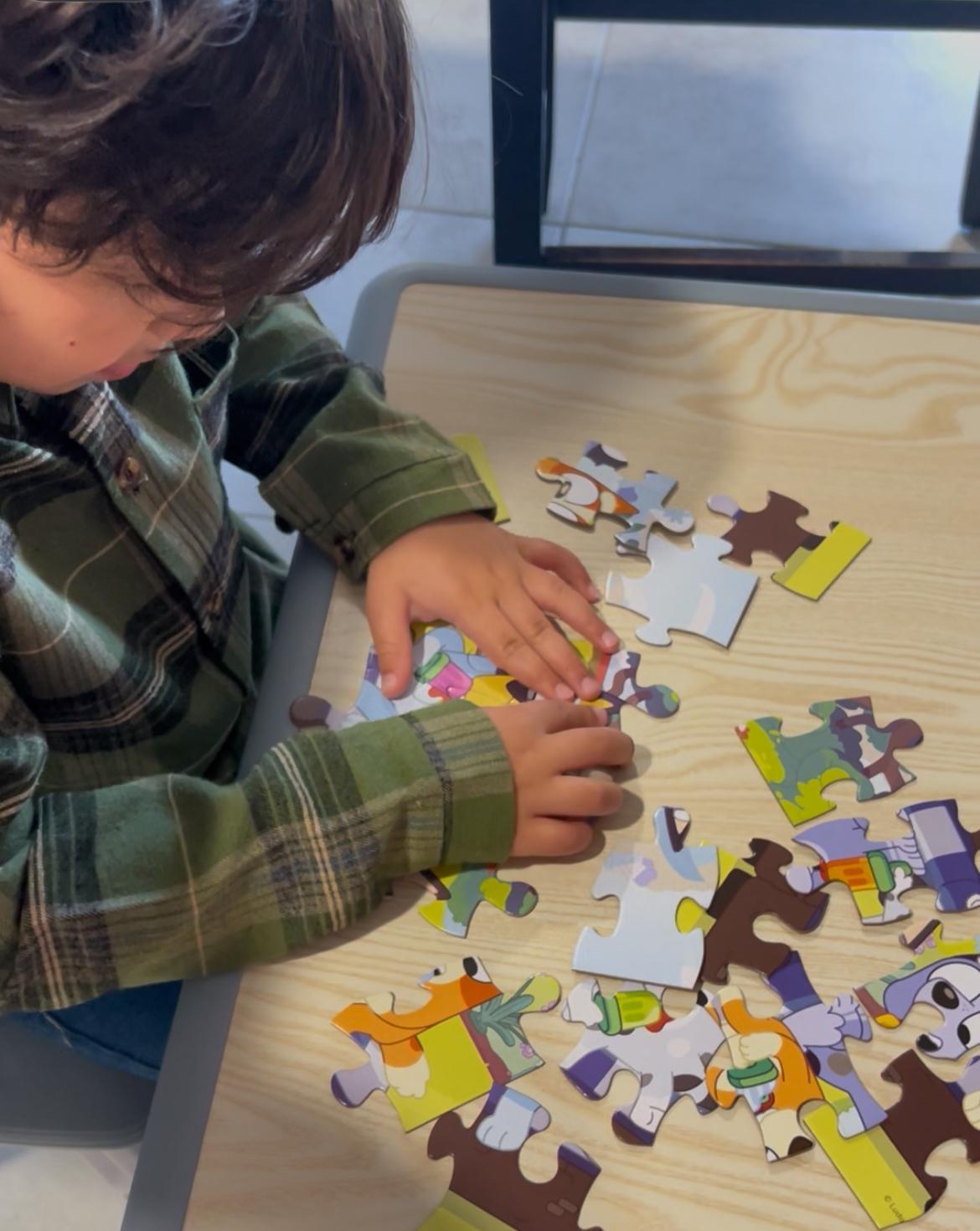
Uncomfortable becomes comfortable. One piece at a time. (Picture taken a while back)
You Weren't Comfortable
You weren't comfortable when you first heard the words "autism" or "ADHD" or "developmental delay."
You weren't comfortable learning IEP jargon.
You weren't comfortable advocating in rooms full of professionals who spoke a language you didn't know.
You weren't comfortable navigating insurance denials, therapy schedules, sensory meltdowns in public places.
But you did it anyway.
And somewhere along the way, the uncomfortable became comfortable.
Not because it got easier.
But because you got stronger.
The Skills You Never Thought You'd Need

Think about everything you've learned since your child's diagnosis.
Things you never imagined you'd need to know:
How to read an evaluation report
How to file an insurance appeal
How to calm a meltdown
How to explain your child's needs to strangers
How to fight for services
How to build routines that work
None of that felt comfortable at first.
But now?
Now it's just part of your life.
You learned. You adapted. You grew.
Because you had to.
So What's Your Definition of Comfortable?
Here's what I've realized:
Comfortable doesn't mean easy.
It means familiar.
It means "I've done this before, and I know I can do it again."
The Ecosystem Around Your Child
Your child exists in an ecosystem:
You (the one who knows them)
Your income (that funds their care)
Your family (the people who help)
Your health (your ability to show up)
Right now, you're comfortable managing that ecosystem.
You know what needs to happen.
You know who to call.
You know how to keep things running.
But what about the ecosystem you haven't built yet?
The one that protects your child when you can't work.
The one that supports them when you're not here.
The one that keeps their world stable even when yours falls apart.
That one probably doesn't feel comfortable.
Because you haven't had to build it yet.
Does That Mean You Should?
You've spent years building skills you never thought you'd need.
Learning things you never wanted to learn.
Getting comfortable with situations that once terrified you.

So here's the question:
Does that mean you should keep looking for situations that make you uncomfortable, if it means you and your child end up better prepared?
Does that mean the financial conversations, the estate planning, the "what happens if I'm gone" discussions are just the next uncomfortable thing you need to make comfortable?
I don't know.
But I think about it.
What If Uncomfortable Is Just Unfamiliar?
What if the financial conversation isn't actually harder than learning to navigate an IEP?
What if it just feels uncomfortable because you haven't done it yet?
And what if, just like everything else, once you start, it becomes familiar.
And familiar becomes comfortable.
The Ecosystem Is Counting on It
You've already proven you can do hard things.
You've already shown you can learn skills you never thought you'd need.
So maybe the question isn't:
"When will I be comfortable having the financial conversation?"
Maybe the question is:
"What's one more uncomfortable thing I can make comfortable, for my child's sake?"
You've done it before.
You can do it again.
Uncomfortable doesn't last forever.
It just lasts until you decide to face it.
✅ P.S. Ready to make the uncomfortable comfortable? Book a free 15-minute call. We'll talk about the ecosystem around your child, and what it needs to stay strong. [Schedule yours here]
✅ P.P.S. This newsletter reaches over 2,000 families. If it resonated with you, share it with a parent who might need it. We're all in this together.
Verse of the Week:
"No discipline seems pleasant at the time, but painful. Later on, however, it produces a harvest of righteousness and peace for those who have been trained by it."
— Hebrews 12:11 (NIV)
Disclaimer: This content is for general educational purposes only and is not a substitute for clinical, medical, financial, tax, or legal advice. Please consult licensed professionals who understand your individual situation.
You got this.

Kind Regards,
Michael Pereira, MBA, CEPA®
Autism Dad I Advocate I Founder of The Autism Voyage®